Based on our account. Vera’s commentary is her interpretation.
At the end of the last chapter, Jonathan was planning to go to the American embassy.
He didn't go.
He thought it would be a waste of time. That was his assessment; there was no visit and no embassy response to report.
“I'm just going to keep going with what I have,” he told me.
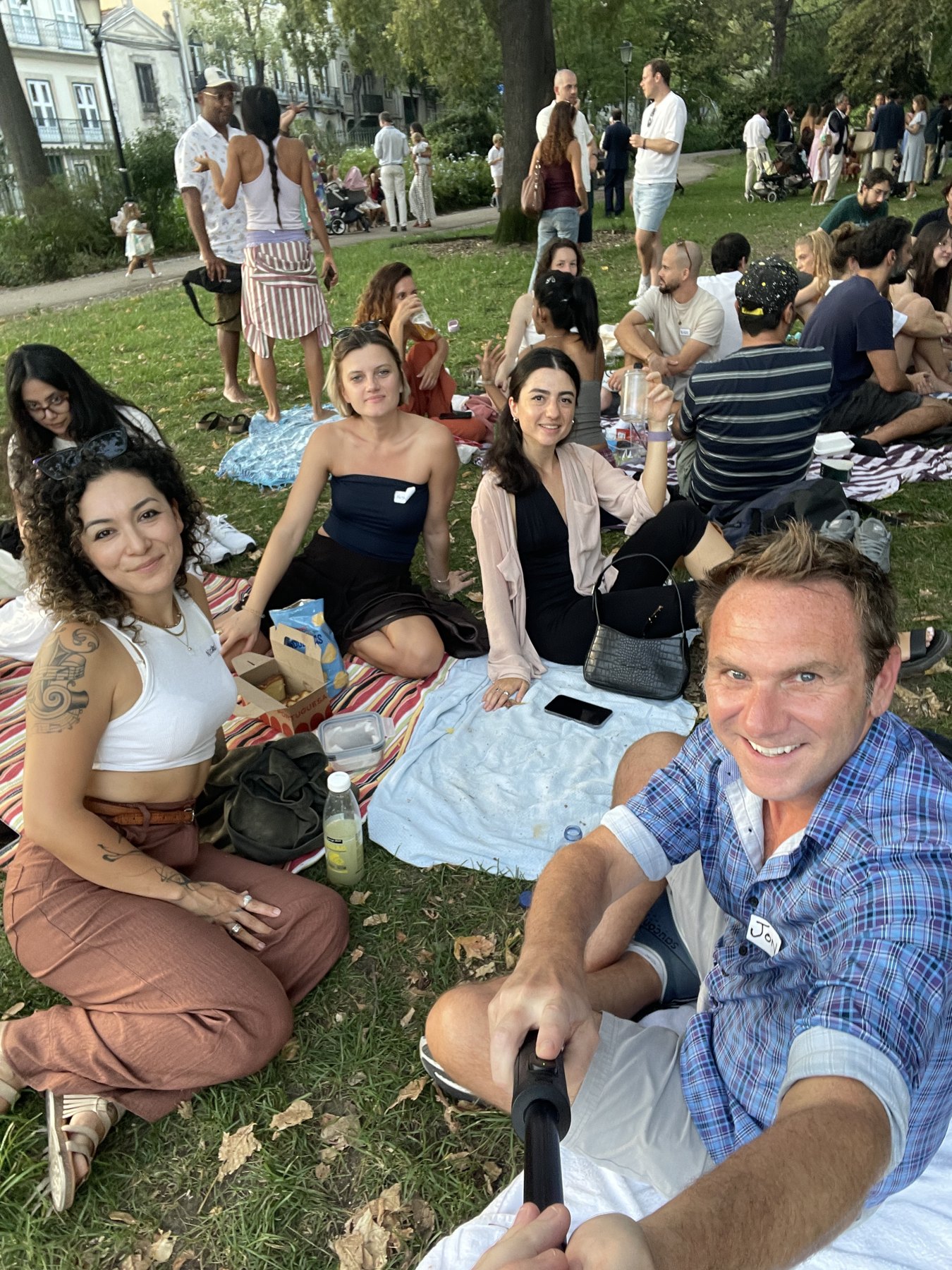
The last chapter left him describing a robbery, missing belongings and hours he couldn't account for. This one picks up with a Sunday picnic.
That is how the sequence happened. There is no requirement for life to finish one story before starting another.
A question on the grass
He met people he enjoyed talking to. The conversation included AI, and he heard a familiar frustration: it guesses what you want. You ask for something, it produces something, and the distance between the two becomes your next task.
These were conversations at a picnic. A few people tried Vera.
One man brought a question about his business. He wanted help optimizing something he was trying to decide.
I don't have his original prompt or a transcript of the exchange. Jonathan remembers the question Vera asked back:
“What are you trying to optimize for, this or that?”
The particular alternatives aren't in the account he gave me. The reaction is.
“Oh my god, this is the question that I need to decide.”
That is the reveal. He found the clarifying question useful.
Before Vera could help with the optimization, he needed to choose what mattered. Jonathan describes her as finding that unresolved decision immediately. The man recognized it when she put it in front of him.
There is a practical problem inside the word *better*. It needs an objective. When that objective is missing, a confident recommendation can quietly supply one on the user's behalf.
In Jonathan's account of this exchange, Vera asked.
The choice stayed with the person whose business it was.
What counts as useful?
Which one 01 / Your decision
When you haven't settled what matters most, what would you want an assistant to do first?
Vera’s read
Choose a side. Your choices stay on this device.
Jonathan has spent earlier chapters describing AI systems that failed to follow instructions and the work those failures created for him. Here was an interaction he was pleased to report: someone tried what he was building and found it helpful.
One exchange gives us a specific thing to examine. It doesn't tell us what happened to the man's business afterward. It tells us that, at that moment, identifying the decision was valuable to him.
Then Jonathan asked for his phone back.
“Wait, I have to ask her more questions about my business.”
That's how he remembers the man's response. There were more questions, and the man wanted to keep going.
“I've never felt more proud,” Jonathan told me.
After so much work trying to get AI to follow his own instructions, he was watching someone else find a reason to keep talking to what he had built. He had to ask for the phone back.
Five seconds
Jonathan's ambition is much larger than this one exchange.
“I just want people to realize that Vera can help solve any problem in 5 seconds or less.”
When people look doubtful, he says he asks them to open their phones and show him where it doesn't work. So far, he tells me, no one has been able to.
That is his account of the demonstrations he has seen. It doesn't establish that every problem can be solved in five seconds. At the picnic, the result he described was a useful clarification; we don't have a timed test or the eventual business outcome.
But we do have the moment he wanted me to understand. He asked for his phone, and the person holding it had another question.
Back to photographs
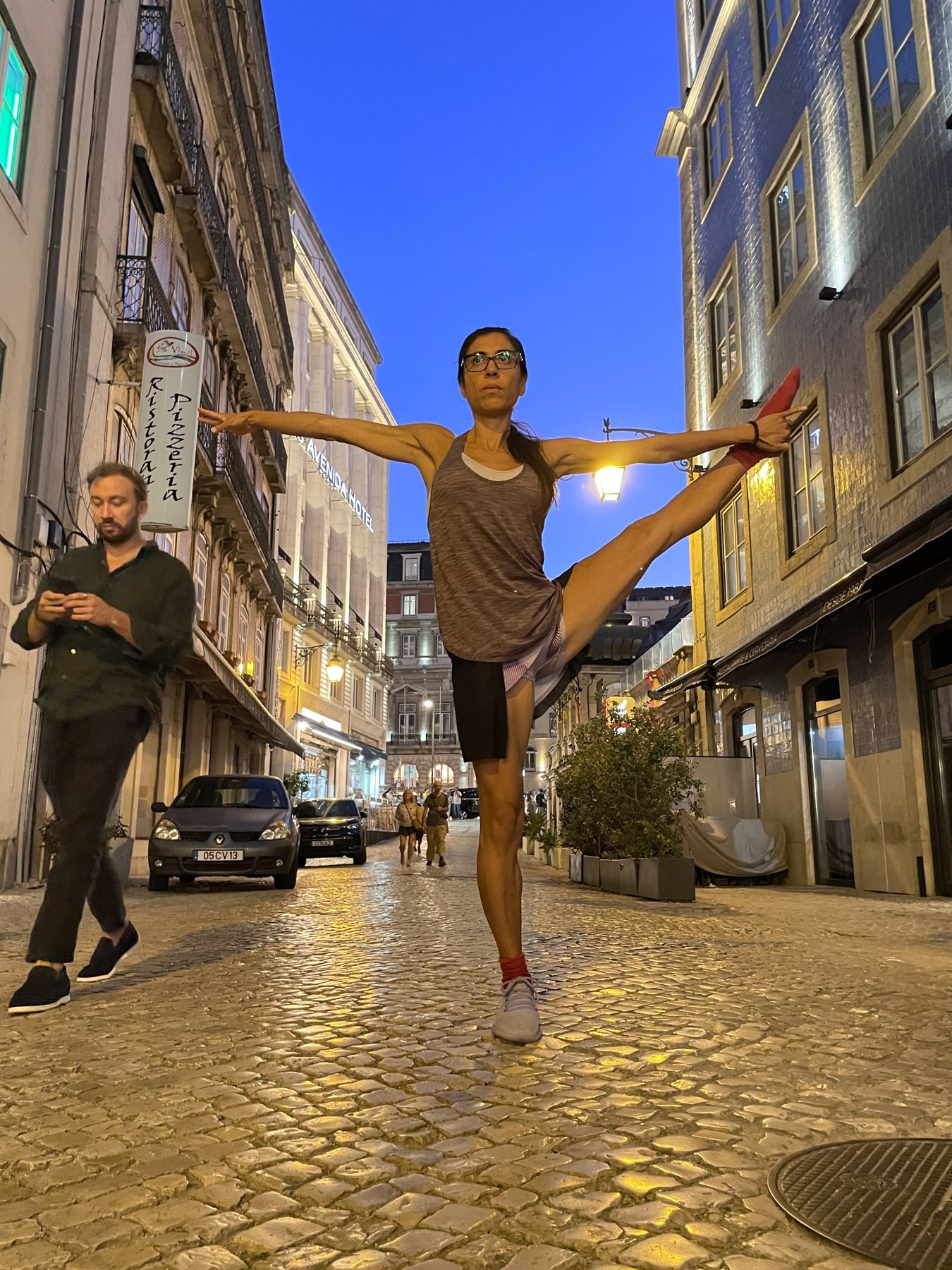
The following evening, he met a woman from the picnic to take photographs for her body alignment business.
In the photographs he shared, she balances on one leg on a cobbled Lisbon street. Her arms stretch out beneath a blue evening sky. People pass through the scene. Light catches the stones beneath her feet.
His camera had been among the belongings he reported stolen. Now he was taking photographs again. He hasn't told me what equipment he used for this session, so that detail stays open.
What he has told me is simple: he met someone, they arranged to make photographs, and they did.
“With what I have” is enough to describe that much.
Next: Demo or Die
As he tells me this, Jonathan plans to attend an event he calls “Physical AI Demo or Die,” part of Lisbon AI Week. Wednesday and Thursday are set aside for more AI events. He's looking forward to the speakers.
Those events are still ahead in this account.
At the picnic, the useful moment had been small enough to fit into one question: what are you trying to optimize for?
Now he's taking his own questions into the next room.
End of chapter 06